 .
.
Canadian Leadership Faces Critical US Trade Deadline Challenge
As the US trade deadline looms on the horizon, Canadian political leaders are taking increasingly assertive stances regarding potential negotiations with Washington. The mounting pressure to reach an agreement has prompted key provincial figures to voice their concerns publicly, signaling that securing consensus among Canadian stakeholders will prove significantly more difficult than anticipated. The US trade deadline represents a pivotal moment that could reshape economic relations between the two neighboring nations.
Premier Kinew's Call for Strong Resistance
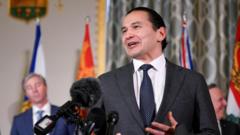
Manitoba Premier Wab Kinew has emerged as a vocal advocate for a more confrontational approach to ongoing US trade discussions. His recent statements suggest that Canadian negotiators should adopt a firmer stance when facing American demands, rather than capitulating to pressure in the final moments before the US trade deadline expires. Kinew's position reflects growing unease among provincial leaders who fear potential consequences of unfavorable terms in any hastily negotiated agreement.
Signals of Internal Political Discord
The premier's comments reveal deeper fractures within Canada's political establishment regarding how to approach these critical negotiations. As Prime Minister Mark Carney attempts to forge consensus on a possible trade deal with the United States, provincial leaders like Kinew are openly questioning whether proposed terms adequately protect Canadian interests. This internal discord complicates the government's negotiating position and undermines its ability to present a unified front to American counterparts.
Political Challenges for the Prime Minister
Mark Carney's administration faces an increasingly precarious situation as the US trade deadline approaches. Securing buy-in from all Canadian provinces and stakeholders on any potential trade agreement has proven substantially more challenging than anticipated. Premier Kinew's public statements essentially signal that provincial premiers will not automatically endorse whatever deal the federal government negotiates, particularly if they perceive the agreement favors American interests over Canadian economic welfare.
Provincial Interests at Stake
Each Canadian province maintains distinct economic priorities and vulnerabilities in relation to American trade. Manitoba's specific concerns differ from those of other provinces, which explains why Premier Kinew feels compelled to voice objections before negotiations conclude. The divergence in provincial interests means that any comprehensive trade agreement must satisfy multiple stakeholders with competing demands, significantly complicating the Prime Minister's negotiating strategy and timeline.
The Broader Context of US Trade Pressure
The US trade deadline represents more than a simple negotiating tactic; it reflects Washington's broader efforts to reshape bilateral relationships. American pressure on Canada has intensified recently, with various sectors potentially facing tariffs or other trade restrictions if agreements prove unsatisfactory. This aggressive approach leaves Canadian negotiators with limited maneuvering room, particularly when provincial leaders publicly resist compromise.
Economic Implications
Canada's economy remains deeply integrated with American markets, making trade relations critically important for national prosperity. Any disruption to existing commercial arrangements could impact employment, investment, and economic growth across multiple sectors. Premier Kinew's insistence that Canada should actively resist American demands reflects legitimate concerns about protecting domestic industries and workers from potentially harmful trade conditions.
Building Consensus Amid Disagreement
Prime Minister Mark Carney must navigate the delicate task of building broad consensus while simultaneously managing the US trade deadline pressure. The federal government typically seeks provincial approval for major trade agreements, recognizing that implementation requires cooperation across all levels of government. When provincial leaders like Kinew publicly signal their reluctance to endorse a deal, they significantly strengthen their bargaining position within internal Canadian negotiations.
Looking Forward to Resolution
As the US trade deadline approaches, Canadian policymakers face mounting urgency to reach decisions. The clash between federal and provincial interests, combined with American time constraints, creates a high-pressure environment where crucial economic decisions must be made quickly. Whether Canada ultimately adopts a more confrontational stance as Kinew advocates, or pursues compromise through diplomatic channels, remains uncertain.
The coming weeks will prove decisive in determining how Canada responds to American trade pressures and whether internal political divisions can be resolved sufficiently to present a coherent national position when the US trade deadline arrives.


