 .
.
Nepal-Tibet Floods: A Catastrophic Natural Disaster Unfolds
A devastating natural disaster struck the border region between Nepal and Tibet on Wednesday, as Nepal-Tibet floods triggered massive landslides that claimed hundreds of lives. The exact death toll and number of missing persons continue to be assessed as rescue teams work tirelessly across the affected areas. This catastrophic event represents one of the most significant weather-related disasters in the region in recent years.
The Extent of the Damage
The Nepal-Tibet floods emerged suddenly, with torrential rainfall creating conditions ripe for massive landslides across the mountainous terrain. Hundreds of residents have been confirmed dead or are reported missing across multiple districts in both Nepal and the Tibetan regions. Local authorities have activated emergency protocols to search for survivors trapped in villages and settlements affected by the landslides.
Geographical Impact and Scope
The flooding primarily affected communities situated along the Nepal-Tibet border, where geographic vulnerability to such disasters is well-documented. The border region's steep topography and monsoon patterns create an inherently dangerous environment during heavy precipitation events. Villages located in valleys and lower elevations experienced the most severe impacts, with some settlements completely cut off from access routes due to landslides blocking mountain passes and roads.
Rescue and Relief Operations
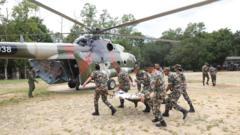
Emergency response teams from both Nepal and Tibet have been mobilized to conduct search and rescue operations throughout the affected zones. The challenging mountain terrain has complicated relief efforts, with many areas remaining inaccessible to rescue vehicles and personnel. Helicopters have been deployed where possible to reach isolated communities and evacuate injured persons to medical facilities.
International Assistance
Regional and international organizations have pledged support to Nepal and Tibet authorities in response to this humanitarian crisis. The difficulty of accessing remote mountain villages has created significant challenges for distributing humanitarian aid, medical supplies, and food to affected populations. Coordination between Nepali and Tibetan authorities continues as both regions work collaboratively to manage this unprecedented disaster.
Weather Conditions and Natural Causes
The Nepal-Tibet floods were triggered by unusually intense rainfall that exceeded seasonal averages across the border region. Meteorological data indicates that weather patterns converged to create dangerous conditions, with moisture-laden winds colliding with the high-altitude terrain of the Himalayan mountain range. Such convergence of atmospheric conditions frequently results in extreme precipitation events during the monsoon season.
Landslide Mechanics
Landslides accompanying the Nepal-Tibet floods occurred when water-saturated soil lost stability on steep slopes. The weight of accumulated water in the ground, combined with gravity and geological factors, triggered massive movements of earth and rock. Multiple landslides occurred sequentially as the flooding event progressed, with each new wave of water destabilizing previously stable earth on mountainsides.
Community Impact and Humanitarian Concerns
Survivors of the Nepal-Tibet floods face urgent humanitarian challenges, including lack of clean water, food shortages, and limited access to medical care. Disease outbreaks pose additional risks in the post-disaster period, as contaminated water sources and poor sanitation conditions prevail in affected communities. Mental health impacts on traumatized survivors will likely require long-term support and psychological services.
Displacement and Shelter Needs
Many residents have been displaced from their homes due to destruction caused by the Nepal-Tibet floods and landslides. Temporary shelters are being established to house displaced persons, though the rapid influx of evacuees has strained available resources. Authorities face the challenge of providing adequate accommodation, food, and water to thousands of people in remote mountain locations.
Long-Term Recovery Prospects
Reconstruction of damaged infrastructure will require sustained international support and significant financial investment. Roads, bridges, communication networks, and buildings damaged by the Nepal-Tibet floods must be rebuilt to restore normalcy to affected regions. Environmental rehabilitation of landslide areas will be necessary to prevent future disasters and restore ecological stability.
Vulnerability Assessment
The Nepal-Tibet border region's vulnerability to such catastrophic events underscores the need for improved disaster preparedness systems and early warning mechanisms. Climate change patterns may increase the frequency and intensity of extreme weather events capable of triggering comparable disasters. Long-term development strategies must incorporate natural disaster risk reduction into infrastructure and land-use planning.
Ongoing Monitoring and Updates
Official authorities in Nepal and Tibet continue compiling precise casualty figures and damage assessments from the Nepal-Tibet floods. Information regarding the event may be updated as rescue operations progress and more complete data becomes available. International media organizations and humanitarian agencies are monitoring the situation closely to provide accurate reporting on this ongoing disaster response effort.


