 .
.
Former Defence Chief Demands Presidential Election
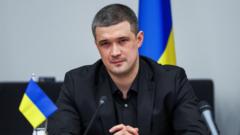
A recently dismissed Ukrainian Defence Minister has sparked significant political controversy by publicly calling for a presidential election to be held, despite the nation remaining under martial law conditions that have suspended all electoral processes since February 2022. The high-ranking official's unexpected announcement has reignited debates about democratic procedures during wartime and the governance structure of the embattled nation.
Understanding Ukraine's Martial Law Framework
Since February 2022, Ukraine has operated under strict martial law provisions that were implemented as security measures during the ongoing military conflict. These constitutional arrangements explicitly prohibit the holding of general elections, including presidential contests, while the martial law declaration remains in effect. The suspension of electoral activities represents one of the most significant restrictions placed on democratic functions within the country.
The martial law framework was established to enable the government to concentrate resources on military operations and national defence during the critical period of armed conflict. Government officials have consistently maintained that resuming electoral campaigns would distract from essential security operations and divide national attention during this vulnerable period.
The Dismissed Official's Position
The ousted Defence Minister's call for a presidential election has positioned him as a vocal critic of current governance arrangements. His demands suggest significant disagreements regarding how the nation should be administered during the ongoing crisis. The former official has emphasized what he perceives as the necessity of renewed democratic legitimacy through electoral processes.
This stance has created notable friction within political circles, with supporters arguing that democratic accountability should not be postponed indefinitely, while opponents contend that electoral activities would undermine military effectiveness during wartime. The controversy highlights deep divisions within Ukraine's political establishment regarding priorities and governance approaches.
Constitutional and Legal Implications
The martial law provisions that suspend elections are embedded within Ukraine's constitutional framework, making any presidential election technically illegal without first lifting the martial law declaration. This constitutional barrier presents a substantial legal obstacle to implementing the dismissed minister's demands.
Legal experts have noted that modifying these constitutional provisions would require extensive parliamentary procedures and potentially face significant resistance from those prioritizing military operations. The presidential election question thus intersects with complex constitutional questions about wartime governance and the balance between security imperatives and democratic principles.
Political Reactions and Divisions
The former Defence Minister's call has generated varied responses across Ukraine's political spectrum. Some figures have expressed sympathy with arguments for renewed democratic engagement, while others have criticized the proposal as destabilizing at a critical moment. The controversy underscores existing tensions within Ukraine's political leadership regarding governance priorities.
Different factions have emphasized contrasting perspectives: some prioritize maintaining unified command structures and undivided governmental focus on military matters, while others argue that democratic legitimacy serves as an essential foundation for sustained national resolve and international support.
International Context and Support Implications
Ukraine's international partners have generally supported the current framework suspending elections, viewing the continuation of martial law as a necessary component of effective defence strategies. However, discussions regarding long-term governance and the eventual restoration of normal democratic processes continue within diplomatic circles.
The dismissed official's position may complicate Ukraine's international relations, particularly regarding how external supporters perceive the nation's commitment to democratic values while managing wartime exigencies. This tension between security imperatives and democratic governance remains a subject of ongoing international discussion.
Looking Forward: Democratic Governance and National Security
The controversy surrounding the presidential election demand reflects fundamental questions about how nations can balance security necessities with democratic principles during prolonged armed conflicts. Ukraine faces the significant challenge of maintaining both effective military operations and legitimate governance structures that retain public confidence.
As the situation evolves, discussions about when and how electoral processes might resume will likely continue among Ukrainian political leaders, constitutional experts, and international observers. The dismissed Defence Minister's public advocacy has ensured that questions about democratic restoration remain part of broader national conversations, even as martial law continues.


