 .
.
Portable Air Conditioners Under Scrutiny by Regulatory Authority
The advertising landscape for portable air conditioners has become increasingly problematic, with regulatory bodies taking decisive action against manufacturers making unrealistic claims. The Advertising Standards Authority (ASA) has identified a troubling pattern of misleading promotional materials that promise consumers rapid cooling solutions that simply cannot deliver on their promises.
What the ASA Investigation Revealed About Portable Air Conditioners
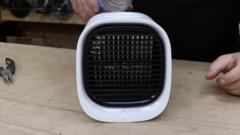
Recent investigations into portable air conditioners making viral claims have exposed fundamental flaws in how these devices are marketed online. The ASA's findings indicate that numerous companies have been promoting small, compact cooling units with claims that defy basic thermodynamic principles. These portable air conditioners purportedly cool entire rooms in approximately 90 seconds, a claim that has attracted millions of consumers seeking affordable temperature relief.
The Reality Behind the Marketing Claims
According to ASA officials, the advertisements claiming portable air conditioners can achieve such rapid cooling effects are fundamentally misleading. The regulatory body emphasizes that such promotional materials exploit consumer desperation during hot weather months, particularly in regions where air conditioning is not standard in residential properties. These portable air conditioners are being marketed through social media platforms where misleading videos and testimonials circulate unchecked.
Understanding How Portable Air Conditioners Actually Function
To comprehend why portable air conditioners fail to deliver on viral marketing promises, one must understand basic cooling technology. Legitimate portable air conditioners operate by extracting warm air from an enclosed space and expelling it outside through a vent hose. This process requires time proportional to room size, insulation quality, and ambient temperature. The fundamental physics of heat transfer cannot be circumvented by marketing claims, regardless of how appealing they sound to consumers seeking quick relief.
Common Specifications of Misleading Portable Air Conditioners
The portable air conditioners being flagged by the ASA typically feature compact designs ranging from 20 to 30 centimeters in height, minimal power consumption claims, and prices significantly below legitimate cooling solutions. These specifications should serve as immediate red flags for informed consumers. Genuine portable air conditioners require substantially more robust components, electrical capacity, and physical dimensions to achieve meaningful temperature reduction in residential spaces.
Why Consumer Demand for Portable Air Conditioners Remains High
Despite warnings about portable air conditioners making false claims, consumer interest continues growing. This phenomenon reflects genuine needs in markets where traditional air conditioning installation is economically prohibitive or logistically impossible. Many renters and budget-conscious homeowners view portable air conditioners as accessible alternatives to expensive permanent cooling systems. This legitimate demand has unfortunately created a perfect market environment for misleading products and exaggerated advertising claims.
The Role of Social Media in Promoting Fake Portable Air Conditioners
Digital platforms have become primary distribution channels for portable air conditioners with inflated performance claims. Videos demonstrating these devices often employ editing techniques, controlled environments, or misleading demonstrations that misrepresent actual performance capabilities. Influencers and content creators may promote portable air conditioners without genuine testing, relying instead on affiliate commission structures that incentivize promoting popular rather than effective products.
What the ASA Enforcement Actions Mean for Consumers
The regulatory body's intervention against portable air conditioners represents an important protective measure for consumers. The ASA has issued guidance requiring manufacturers and retailers to provide substantiated evidence supporting any claims about portable air conditioners' cooling capacity. These enforcement actions specifically target advertisements claiming portable air conditioners can cool rooms in specific timeframes or achieve temperature reductions without proper qualification and evidence.
Identifying Legitimate Versus Misleading Portable Air Conditioners
Consumers evaluating portable air conditioners should prioritize specifications over marketing language. Legitimate products provide detailed technical information including BTU ratings, cooling area square footage, noise levels, and energy consumption metrics. Reputable portable air conditioners are backed by manufacturer warranties, independent testing verification, and realistic performance descriptions. Any portable air conditioners promising 90-second room cooling or similar impossibilities warrant immediate skepticism.
Future Implications for the Portable Air Conditioners Market
The ASA's enforcement actions against portable air conditioners with false claims signal a broader regulatory shift toward stricter e-commerce advertising standards. Manufacturers will face increased scrutiny when promoting portable air conditioners, with particular attention to substantiating performance-related assertions. This regulatory environment may temporarily reduce the volume of portable air conditioners available online but should ultimately improve product quality and consumer protection. Future portable air conditioners marketed through reputable channels will likely feature more accurate, conservative performance descriptions reflecting genuine capabilities rather than aspirational marketing language.


