 .
.
Actor Raises Concerns About Digital Credibility
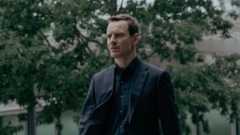
The online trust crisis has become increasingly difficult to navigate, according to leading actor Michael Fassbender, who recently participated in candid discussions surrounding espionage, artificial intelligence, and the psychological toll of maintaining dual identities. Speaking alongside cast members from the spy thriller series The Agency, Fassbender highlighted the alarming disconnect between genuine and fabricated content circulating across digital platforms.
As society grapples with the online trust crisis, technology has accelerated the dissemination of misinformation at unprecedented rates. The proliferation of deepfakes, synthetic media, and algorithmic manipulation has created an environment where distinguishing authentic information from deceptive narratives requires unprecedented vigilance from both individuals and institutions.
The Agency Cast Explores Contemporary Espionage Themes
During interviews promoting the spy thriller series The Agency, cast members examined how classical espionage tradecraft intersects with modern digital threats. The narrative tension between traditional intelligence operations and contemporary cyber warfare forms the thematic backbone of their discussions, reflecting real-world concerns about information warfare in the digital age.
The spy thriller format provides an ideal vehicle for examining these complex issues, as it allows audiences to experience the cognitive dissonance that intelligence professionals navigate daily. The Agency presents scenarios where distinguishing truth from deception becomes as critical as any tactical operation, mirroring challenges faced by cybersecurity experts and digital forensics specialists.
Artificial Intelligence's Role in Information Warfare
Artificial intelligence has emerged as a significant factor in the online trust crisis, capable of generating convincing fake videos, audio recordings, and written content. These technological capabilities fundamentally challenge our historical reliance on visual and audio evidence as proof of authenticity.
The cast members of The Agency emphasized how artificial intelligence serves as both a narrative device and a reflection of genuine societal anxieties. AI-generated content can now replicate human speech patterns, facial expressions, and behavioral nuances with disturbing accuracy, forcing institutions and individuals to develop more sophisticated verification protocols.
Psychological Dimensions of Double Lives
Beyond technological concerns, the discussion turned toward the personal cost of maintaining dual identities—a central theme in spy thriller entertainment and an increasingly relevant metaphor for digital existence. Individuals now routinely manage multiple online personas across various social media platforms, each presenting carefully curated versions of their identities.
The psychological burden of this compartmentalization parallels the experiences of undercover intelligence operatives depicted in The Agency. This parallel explores how humans rationalize contradictions between public and private selves, particularly when external pressures incentivize maintaining strategic deceptions.
Verifying Information in an Age of Uncertainty
The conversation ultimately addressed practical approaches to combating misinformation within the online trust crisis. Media literacy, source verification, and digital forensics have become essential skills for informed citizenship. Professionals working in intelligence, journalism, and technology development are establishing new frameworks for authentication and verification.
The Agency's narrative demonstrates how historical espionage techniques—cross-referencing sources, identifying inconsistencies, and building contextual understanding—remain valuable tools for modern information consumers seeking to navigate the online trust crisis.
Industry Response to Digital Threats
Technology companies, government agencies, and educational institutions are responding to the online trust crisis through enhanced regulation, improved detection systems, and expanded digital literacy programs. These efforts represent collective acknowledgment that artificial intelligence capabilities demand proactive rather than reactive approaches.
The entertainment industry, through productions like The Agency spy thriller, contributes to this broader conversation by dramatizing complex scenarios that encourage audience reflection on contemporary challenges. Such narrative exploration helps society process anxieties about technology while maintaining engagement with espionage storytelling traditions.
Moving Forward in Digital Society
Michael Fassbender's observations regarding the online trust crisis represent growing consensus among cultural commentators, technologists, and security professionals. The convergence of artificial intelligence advancement, social media proliferation, and traditional espionage tradecraft has created an environment demanding heightened critical thinking.
The Agency serves as both entertainment and social commentary, offering viewers frameworks for understanding why distinguishing truth from fabrication has become increasingly complex. As technology continues evolving, the importance of developing robust information verification skills only intensifies, ensuring that individuals can navigate digital environments with appropriate skepticism and discernment.


