 .
.
Ford's Decision to Reinstate Human Engineers
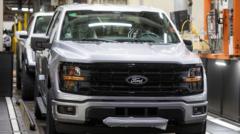
The automotive industry has witnessed a significant shift as Ford Motor Company made the strategic decision to bring back human engineers to its quality assurance operations. This reversal comes after the company discovered that AI quality checks were unable to consistently match the exceptional standards maintained by experienced technicians across its production facilities.
Ford's move represents a critical moment in the ongoing debate about automation versus human expertise in manufacturing environments. The company invested substantially in artificial intelligence systems designed to streamline quality control processes and reduce operational costs. However, the technology ultimately proved insufficient when compared to the nuanced judgment and technical prowess of veteran engineers who have spent decades perfecting their craft.
The Limitations of Artificial Intelligence in Quality Control
Artificial intelligence systems have revolutionized many aspects of modern manufacturing, yet their application in comprehensive quality assurance presents unique challenges. Ford's experience demonstrates that AI quality checks, while effective at identifying obvious defects, frequently overlooked subtle inconsistencies that human inspectors routinely detected. These nuanced quality issues, though not always immediately visible, could compromise vehicle safety and long-term durability.
The automobile manufacturing sector demands an exceptionally high standard of precision. Veteran technicians possess an intuitive understanding of what constitutes acceptable performance versus potential problems. They recognize patterns that emerge from years of hands-on experience, patterns that current AI algorithms struggle to quantify and replicate. This gap between technological capability and human judgment became increasingly apparent as Ford analyzed its quality metrics over successive production cycles.
Why Machines Cannot Replace Experienced Technicians
The fundamental challenge with deploying AI quality checks lies in the inherent limitations of machine learning models. These systems operate based on training data and predetermined parameters, which means they struggle when encountering scenarios outside their original programming specifications. Manufacturing environments frequently present unexpected variables that demand real-time decision-making and adaptive problem-solving—precisely where human engineers excel.
Veteran technicians at Ford bring contextual knowledge that transcends simple rule-following. They understand not only what should be checked but why each component matters within the broader system. They recognize the interdependencies between different vehicle systems and can assess whether a particular variance might create problems elsewhere in the vehicle's complex architecture.
Ford's Quality Assurance Transformation
By reinstating human engineers, Ford affirmed its commitment to maintaining the highest quality standards for consumers. This decision required reorganizing quality control departments and rehiring experienced professionals who had previously been reassigned or separated from the company. The financial and logistical implications were substantial, yet the company determined that protecting its reputation and customer satisfaction justified the investment.
The reintegration of human engineers alongside existing technological systems represents a hybrid approach to quality assurance. Rather than viewing automation and human expertise as mutually exclusive, Ford now leverages both complementary strengths. Machines handle routine tasks and data processing, while engineers focus on complex evaluations requiring judgment, experience, and creative problem-solving.
The Business Case for Human Expertise
From a purely economic perspective, quality failures carry significant costs. Vehicle recalls, warranty claims, and damage to brand reputation far exceed the expense of maintaining a robust engineering workforce. When consumers purchase automobiles from Ford, they expect vehicles built to exacting standards. Any compromise in quality assurance directly threatens customer loyalty and corporate profitability.
The company's decision reflects a mature understanding of manufacturing economics. Cutting corners on quality control through excessive automation ultimately creates larger financial liabilities. By employing experienced engineers, Ford protects its market position and ensures that every vehicle meets the rigorous standards consumers deserve.
Implications for the Manufacturing Sector
Ford's experience with AI quality checks sends an important message throughout the automotive and broader manufacturing industries. While technological innovation remains essential for competitive advantage, blind faith in automation without understanding its limitations proves counterproductive. The integration of artificial intelligence into manufacturing must occur thoughtfully, with realistic assessments of what machines can and cannot accomplish reliably.
This trend suggests that future manufacturing environments will increasingly embrace hybrid models combining human expertise with technological capabilities. Rather than viewing workers as expendable resources replaceable by machines, forward-thinking companies recognize that human insight, creativity, and judgment remain irreplaceable components of high-quality production.
Ford's commitment to bringing back human engineers demonstrates that the future of manufacturing lies not in choosing between humans or machines, but in strategically deploying both to maximize quality, efficiency, and innovation.


