 .
.
Indonesia Earthquake Prompts Major Rescue Efforts
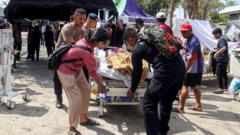
Emergency response teams across the region are intensifying search operations following the devastating Indonesia earthquake that has claimed at least 47 lives and caused widespread structural damage. Authorities have mobilized rescue personnel to navigate through collapsed buildings and debris-filled areas as part of ongoing survival efforts.
Initial Damage Assessment Underway
Officials confirmed that a comprehensive rapid assessment evaluating the full scope of the Indonesia earthquake's destructive impact has commenced across affected areas. The preliminary evaluation reveals that hundreds of residential and commercial buildings sustained severe damage or complete destruction during the seismic event.
Structural Damage Overview
The scale of building destruction presents significant challenges for rescue operations. Entire neighborhoods have been reduced to rubble, with rescue teams working against time to locate any individuals who may be trapped beneath collapsed structures. Engineers and structural specialists are being deployed to assess which buildings remain stable enough for search operations to proceed safely.
Casualty Reports
The confirmed death toll currently stands at 47 individuals, though officials caution that this number may increase as assessment teams continue their work through affected communities. Many additional people remain missing or unaccounted for, prompting heightened urgency in rescue operations across the disaster zone.
Emergency Response Coordination
National disaster management agencies have activated emergency protocols to coordinate rescue efforts systematically. Multiple response teams have been deployed to prioritize areas with the highest concentration of collapsed structures and largest populations. Medical personnel are stationed throughout the region to provide immediate care to survivors extracted from the debris.
Resource Mobilization
Heavy machinery including excavators and cranes has been transported to assist in clearing debris and accessing areas where survivors may be sheltering. Search and rescue dogs accompanied by trained handlers are being deployed to enhance detection capabilities in challenging terrain.
International Support for Indonesia Earthquake Response
Neighboring countries and international humanitarian organizations have offered assistance to support the ongoing rescue and recovery operations. This collaborative approach strengthens the capacity of local authorities to manage the scale of destruction caused by the Indonesia earthquake effectively.
Communication with Affected Communities
Government officials maintain regular communication with surviving residents and families of missing persons. Information regarding shelter locations, medical services, and aid distribution points is being disseminated through multiple communication channels to ensure affected populations can access critical support services.
Long-Term Recovery Planning
While immediate rescue operations continue, authorities are simultaneously beginning preliminary discussions regarding reconstruction efforts and long-term recovery planning following the Indonesia earthquake. Engineers are documenting structural damage patterns to inform future building standards and seismic safety protocols.
The rapid response to this natural disaster demonstrates the importance of preparedness systems and coordinated emergency management. As rescue operations progress, officials urge citizens to follow safety guidelines and report any information that could assist in locating missing persons in affected regions.


