 .
.
Iran's Supreme Leader Absent from Major Funeral Event
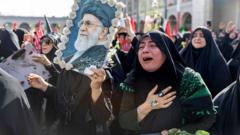
Iran's supreme leader has conspicuously remained out of public view as high-ranking government and religious officials gathered to pay respects at the ayatollah's funeral service. The notable absence of Iran's supreme leader marks a significant development in the country's political landscape, occurring amid heightened regional tensions stemming from recent military confrontations.
Background of the Attack and Its Consequences
The sequence of events that precipitated the current situation began when a targeted strike claimed the life of a prominent religious figure, an occurrence that unfolded during the early stages of escalating conflict between the United States, Israel, and Iran. This attack fundamentally altered the political dynamics within Iran's leadership structure, prompting widespread concern about the nation's governmental stability and continuity of power.
Mojtaba Khamenei's Absence from Public Life
Mojtaba Khamenei has maintained a deliberate absence from public engagements since the tragic incident that resulted in his father's death at the commencement of the US-Israel military operations against Iran. His withdrawal from the public sphere has generated considerable speculation within international diplomatic circles regarding his whereabouts, his physical condition, and the extent of his involvement in current governmental affairs.
The lack of visible appearances by Iran's supreme leader raises critical questions about the operational capacity of the nation's highest executive office. During such periods of national crisis and regional instability, the public visibility of supreme leadership traditionally serves as a reassurance mechanism to both domestic constituencies and international observers concerning the continuity of governance.
Senior Officials Fulfill Ceremonial Obligations
Despite the prominent absence of Iran's supreme leader, numerous senior government ministers, military commanders, and religious scholars attended the funeral proceedings. Their participation underscored the formal nature of the ceremony and demonstrated that the state apparatus continues to function despite the leadership vacuum created by the current situation.
The attendance of high-ranking officials at the ayatollah's funeral served multiple purposes: honoring the deceased religious figure, maintaining governmental legitimacy, and projecting stability during a period of significant external pressure and internal uncertainty. These ceremonial functions remain essential for sustaining public confidence in institutional frameworks during times of crisis.
Implications for Iran's Political Structure
The circumstances surrounding Iran's supreme leader's non-appearance raise broader questions about succession planning, operational protocols, and the resilience of the nation's administrative institutions. The absence during such a significant state ceremony suggests either voluntary withdrawal or circumstances preventing public presentation, both scenarios carrying substantial political implications.
International observers have intensified their monitoring of Iran's leadership dynamics, recognizing that the country's response to current challenges will be substantially influenced by the clarity and decisiveness of its supreme leadership. The visibility and engagement of top officials directly impacts regional stability and the trajectory of ongoing international negotiations.
Regional Context and Current Tensions
The funeral ceremony occurred within the broader context of US-Israel military activities against Iran, a period characterized by heightened alert status across military and governmental institutions. The timing of the ayatollah's funeral, combined with Iran's supreme leader's conspicuous absence, has intensified international focus on Iran's capacity to respond effectively to external threats while managing internal succession concerns.
The geopolitical ramifications of this situation extend beyond Iran's borders, affecting regional security dynamics and international diplomatic efforts to de-escalate tensions. Multiple stakeholders maintain keen interest in how Iran's leadership resolves the current situation and the extent to which governing capacity has been compromised by recent developments.
What Comes Next
Moving forward, observers anticipate that Iran's supreme leader will need to make strategic public appearances to stabilize the political situation and reassert governmental authority. The duration of his absence and the circumstances of his eventual return to public life will constitute crucial indicators regarding the stability of Iran's leadership structure and the nation's capacity to navigate the current regional crisis effectively.


