.
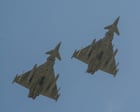
RAF Typhoon Fighters Deploy to Defend Saudi Arabia
The United Kingdom has announced a significant military deployment involving RAF Typhoon fighters to Saudi Arabia, marking a substantial escalation in Western military involvement in regional conflicts. RAF Typhoon fighters will undertake defensive aerial operations across Saudi Arabian territory, protecting major cities and vital infrastructure from ongoing Houthi attacks originating from Yemen.
Mission Scope and Objectives
This military operation represents one of the most consequential defense initiatives approved under the current government administration. RAF Typhoon fighters have been specifically tasked with conducting protective patrol missions throughout Saudi airspace, with particular emphasis on securing strategic locations including airports and energy infrastructure facilities.
The deployment directly addresses persistent threats posed by Houthi militant forces, who have conducted numerous assault operations against Saudi Arabian targets. These attacks have primarily focused on airports and petroleum production facilities, necessitating enhanced aerial defense capabilities. RAF Typhoon fighters are equipped to identify and intercept incoming hostile aircraft, missiles, and unmanned aerial systems before they reach their intended targets.
Expanding Western Military Presence
This commitment demonstrates the broader Western strategy of increasing military coordination within the Middle Eastern region. Allied nations have progressively expanded their defensive support mechanisms, recognizing the destabilizing effects of ongoing hostilities. RAF Typhoon fighters represent cutting-edge air defense technology, providing sophisticated surveillance and interception capabilities essential for protecting critical civilian and commercial installations.
The decision to deploy RAF Typhoon fighters underscores growing international concern regarding regional security stability. The escalating conflict dynamics have prompted multiple Western governments to strengthen their military partnerships with Gulf Cooperation Council nations, particularly Saudi Arabia, which serves as a crucial regional ally.
Strategic Importance and Infrastructure Protection
Saudi Arabia's aviation infrastructure, including civilian and commercial airports, faces periodic threats from Houthi missile and drone operations. Similarly, petroleum extraction and processing facilities represent economically vital installations requiring comprehensive protective measures. RAF Typhoon fighters provide the surveillance range and weapons systems necessary for effective interception operations.
The deployment of RAF Typhoon fighters addresses vulnerabilities that conventional ground-based defense systems cannot adequately cover. Through continuous aerial patrols and advanced radar capabilities, these fighter aircraft establish protective perimeters around designated high-priority zones. This preventive approach minimizes response times and enhances overall defensive effectiveness against aerial threats.
Military Capability and Technology
RAF Typhoon fighters represent fourth-generation multirole combat aircraft featuring advanced avionics, extended range capabilities, and sophisticated weapons systems. These aircraft possess superior maneuverability, enabling effective engagement with both conventional aircraft and unmanned systems. The Typhoon platform supports various defensive configurations, including air-to-air missiles and advanced targeting systems.
The operational deployment of RAF Typhoon fighters incorporates real-time intelligence sharing with Saudi Arabian military command structures. This integrated approach enhances situational awareness and enables coordinated response protocols when threats materialize. British RAF pilots bring extensive training and operational experience, contributing substantially to mission effectiveness and overall defensive posture.
Political and Strategic Dimensions
This military commitment reflects broader geopolitical considerations affecting UK foreign policy objectives in the Middle East. The deployment of RAF Typhoon fighters demonstrates Britain's commitment to regional stability and support for established Gulf partners. Such military cooperation strengthens bilateral relationships while addressing immediate security concerns confronting Saudi Arabia.
Government authorization for RAF Typhoon fighters deployment represents a decisive political commitment, involving substantial resource allocation and operational commitment. The operation encompasses personnel deployment, logistical support systems, and ongoing operational coordination across extended time horizons. This comprehensive military engagement reflects serious governmental determination to maintain regional security partnerships and prevent further escalation of hostilities affecting civilian populations and critical infrastructure installations.