 .
.
Track Defect Identified in RAIB Railway Safety Investigation
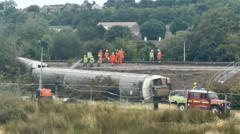
A track defect has been discovered during preliminary investigations conducted at the location near Lewes where a derailment incident occurred. The Rail Accident Investigation Branch (RAIB) has documented an "irregularity" at the site, marking a significant development in understanding the circumstances surrounding the accident. This track defect finding represents crucial evidence in determining the root causes of the derailment and establishing comprehensive safety protocols for future prevention.
Details of the Track Defect Discovery
The initial examination by RAIB specialists revealed the presence of an irregularity in the railway track infrastructure near Lewes. This track defect was identified during the early phases of the investigation and has become a focal point for engineers and safety experts analyzing the incident. The precise nature and extent of the track defect are currently undergoing detailed technical assessment to determine its contribution to the derailment event.
RAIB's Investigative Approach
The RAIB investigation team has established a methodical examination process at the Lewes derailment site to identify all potential factors. The discovery of the track defect demonstrates the importance of on-site physical evidence in railway accident investigations. Investigators are documenting the irregularity's characteristics, including its location, dimensions, and structural composition, to build a comprehensive understanding of how the track defect may have influenced the train's behavior.
Railway Safety Implications
The identification of a track defect near the derailment location raises important questions about track maintenance protocols and inspection procedures across the railway network. Railway authorities will likely review current maintenance schedules and inspection methodologies to prevent similar track defect occurrences. The findings from this investigation will inform recommendations for enhanced monitoring systems and preventive measures to ensure passenger safety.
Investigation Timeline and Next Steps
The RAIB's investigation into the Lewes incident continues with additional technical analysis of the discovered track defect. Specialists will examine the track's historical maintenance records and previous inspection reports to determine when the track defect first developed. Engineering teams are also collecting data on environmental factors, weather conditions, and train specifications that may have contributed to the derailment when the train encountered the track defect.
Impact on Railway Operations
Following the discovery of the track defect at the Lewes site, railway operators have implemented temporary safety measures to prevent future incidents in the affected area. Track workers have been deployed to conduct more frequent inspections of the route, with particular attention to identifying any additional irregularities that could pose safety risks. The presence of the track defect has also triggered a broader review of similar track sections throughout the network.
Expert Analysis and Technical Assessment
Specialized engineers from the RAIB are conducting in-depth technical analysis of the track defect to understand its structural composition and how it developed over time. The assessment includes laboratory testing of track samples collected from the irregularity site. This scientific approach to examining the track defect will provide definitive evidence about whether manufacturing defects, installation errors, or degradation caused the irregularity that contributed to the derailment.
Broader Railway Safety Considerations
The discovery of this track defect has prompted the railway industry to examine whether similar defects exist elsewhere on the network. Network Rail and other infrastructure managers are reviewing their inspection protocols to ensure they can detect track irregularities before they result in safety incidents. The findings regarding this track defect will be included in the RAIB's final report, which will provide recommendations for systemic improvements to railway safety and maintenance standards.


