 .
.
Extraordinary Rescue: Venezuela Earthquake Survivor Emerges After Week Trapped
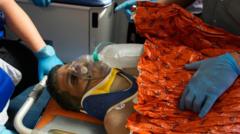
In a remarkable turn of events following the devastating earthquake that struck Venezuela, rescue teams successfully extracted a survivor who had spent eight days buried beneath the wreckage of a collapsed parking structure. This Venezuela earthquake survivor's rescue represents one of the most compelling survival stories from the natural disaster, demonstrating the determination of both the victim and emergency response personnel.
Hernán Gil, whose name has become synonymous with hope and resilience, was discovered alive beneath the multi-storey car park that had crumbled during the seismic event. His extraction required meticulous rescue operations conducted over an extended period, as teams carefully removed debris to prevent further structural collapse and ensure his safe removal from the site.
Days of Survival Against the Odds
The eight-day ordeal that Hernán Gil endured represents an extraordinary test of human resilience. Trapped in a confined space surrounded by concrete and steel, the Venezuela earthquake survivor remained conscious and communicative throughout much of the rescue operation. His ability to maintain psychological stability while waiting for rescue teams to reach him played a crucial role in his eventual survival.
Rescue workers, hearing Gil's calls for help emanating from deep within the wreckage, coordinated their efforts with precision and patience. The rescue operation required specialized equipment and expertise to navigate the unstable rubble safely. Every movement had to be calculated to prevent the collapse of additional debris that could prove fatal to both the survivor and the rescue personnel working tirelessly above.
Communication Provides Hope to Rescuers
Throughout the rescue effort, Hernán Gil maintained verbal contact with the emergency responders who worked around the clock to free him. His encouragement to the rescue teams, despite his dire circumstances, created a powerful human connection between the trapped survivor and those working for his liberation. This mutual support system proved instrumental in maintaining morale during the challenging multi-day operation.
The Venezuela earthquake survivor's voice from beneath the rubble served as a beacon, guiding rescue teams toward his exact location and providing confirmation that he remained viable for extraction. As rescuers inched progressively closer to Gil's position, the operations intensified with renewed urgency, knowing that time was increasingly critical for the survivor's health and chances of making a full recovery.
The Critical Moments of Extraction
The final phase of the rescue operation presented the most dangerous challenges. Removal of the last layers of debris required extreme caution to ensure that the structural integrity of the remaining wreckage did not catastrophically fail. Medical teams stood ready to provide immediate emergency care once the Venezuela earthquake survivor could be safely removed from his underground prison.
Specialized rescue equipment, including hydraulic jacks, cutting tools, and stabilization systems, worked in concert to create a safe passage for extraction. The rescue operation demonstrated the capabilities of Venezuela's emergency response infrastructure and the international cooperation that occurred in the aftermath of the earthquake.
Medical Assessment and Recovery
Upon extraction, Hernán Gil underwent comprehensive medical evaluation to assess his condition after spending such an extended period trapped without adequate food, water, or medical attention. The Venezuela earthquake survivor's physical and psychological status required careful monitoring as medical professionals worked to prevent complications that commonly develop in extended entrapment situations.
Dehydration, malnutrition, pressure-related injuries, and potential internal complications represented serious health concerns that needed to be addressed during the immediate post-rescue phase. Despite these challenges, Gil's extraction alive after eight days provides medical professionals with a remarkable case study in human survival capabilities.
Broader Impact on Disaster Response
The successful rescue of this Venezuela earthquake survivor contributed valuable lessons to emergency management protocols. The operation demonstrated the importance of sustained rescue efforts beyond the initial 72-hour window when survival rates traditionally decline sharply. This case has influenced how rescue teams approach extended entrapment scenarios in subsequent disasters.
Hernán Gil's story serves as an inspiration to communities affected by natural disasters and highlights the dedication of rescue personnel who continue working despite overwhelming odds. The Venezuela earthquake survivor's emergence from the wreckage became a symbol of hope during a period when the earthquake had caused significant destruction and loss of life throughout the region.


