 .
.
Carney Denounces Trump's Tariff Approach Following Trade Talks Breakdown
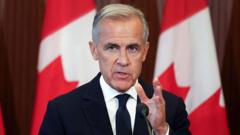
Mark Carney has publicly challenged Trump's tariff strategy, characterizing the latest round of Trump tariffs miscalculation as a counterproductive move that threatens international economic stability. Following the collapse of bilateral trade negotiations, Carney expressed deep concern over what he describes as a fundamental misunderstanding of modern trade dynamics and their far-reaching consequences.
The Canadian official's remarks come at a critical juncture in international commerce, where tensions between trading partners have reached unprecedented levels. Carney's assessment suggests that the administration's approach to tariffs represents not merely a negotiating tactic, but rather a significant strategic error with potentially severe ramifications for all parties involved.
Retaliatory Measures Announced Reluctantly
In a carefully worded statement, Canada's leadership announced they would be compelled to implement retaliatory tariffs in response to the American measures. The decision was characterized as reluctant, signaling that alternative approaches had been exhausted through diplomatic channels and direct negotiations.
The announcement reflects the gravity of the situation, as governments typically avoid tariff escalation due to the disruption it causes to supply chains and consumer pricing. However, officials indicated that without reciprocal action, the economic disadvantage would become untenable for Canadian industries and workers. The decision to impose countermeasures was presented as a necessary defensive response rather than an aggressive commercial strategy.
Understanding the Trade War Context
The escalation represents the latest chapter in ongoing trade war negotiations that have characterized recent international relations. What began as targeted discussions about specific trade imbalances has evolved into a broader confrontation affecting multiple sectors and economies.
Industry observers note that the breakdown of talks suggests fundamental disagreements about the underlying principles governing international commerce. Rather than finding common ground on disputed issues, both sides appear to have hardened their positions, making future negotiations increasingly difficult. The collapse of discussions signals that preliminary negotiations failed to bridge significant gaps between competing national interests and economic philosophies.
Assessing the Miscalculation Claim
Carney's characterization of Trump's actions as a miscalculation carries particular weight given his background in international finance and economic policy. His perspective suggests that the tariff approach underestimates the resilience and adaptability of trading partners, as well as the broader economic consequences of sustained trade friction.
According to analysts and policy experts, miscalculations in trade policy can have cascading effects that extend far beyond the immediate parties involved. Financial markets react to uncertainty; businesses delay investments; and consumers ultimately bear increased costs. The assertion that such tariffs represent poor strategic thinking implies that more sophisticated approaches could achieve better outcomes for all stakeholders.
US Trade Policy Under Scrutiny
The latest developments have intensified scrutiny of American US trade policy and its underlying assumptions. Critics argue that the administration's reliance on tariffs as a primary negotiating tool reflects outdated thinking about how modern economies operate and interact.
Contemporary trade involves complex, integrated supply chains where components cross borders multiple times before reaching consumers. Tariffs disrupt these intricate systems, creating inefficiencies and ultimately raising costs for American businesses and households. The policy approach appears to underestimate these second and third-order effects, focusing instead on headline impacts that appeal to specific constituencies.
International Response and Implications
Beyond Canada's announced response, other trading partners are reportedly considering their own countermeasures. The prospect of escalating tariff cycles raises concerns about potential economic slowdown and reduced investment across multiple nations. Financial institutions have begun adjusting forecasts downward, anticipating reduced growth in the near to medium term.
The situation underscores the interdependence of modern economies and the risks associated with unilateral trade actions. Countries that previously collaborated on mutually beneficial agreements now face pressure to protect domestic interests, even if such protection ultimately proves counterproductive for all involved.
Path Forward Uncertain
With negotiations currently stalled and retaliatory measures being implemented, the path toward resolution remains unclear. Both sides have dug into positions that make compromise increasingly difficult. The window for diplomatic solutions appears to be narrowing as economic retaliation accelerates.
Industry groups and labor organizations have begun expressing alarm about the potential economic consequences. Small and medium-sized enterprises that depend on cross-border supply chains face particular vulnerability. As uncertainty persists, many companies are already adjusting operations and exploring alternative suppliers, changes that may prove permanent even if trade relations eventually improve.


