 .
.
British Steel Nationalisation: A Historic Decision for UK Manufacturing
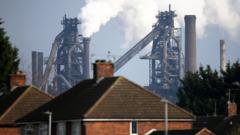
The United Kingdom's sole remaining facility dedicated to producing virgin steel has transitioned into public ownership, marking a significant turning point in the nation's industrial landscape. British Steel nationalisation comes after a prolonged period of instability and mounting concerns regarding the facility's long-term viability and strategic importance to the UK economy.
Understanding the Context Behind British Steel Nationalisation
The decision to nationalise Britain's last virgin steel manufacturer represents a watershed moment for the nation's manufacturing sector. For years, stakeholders across government, industry, and labour unions have debated the future of domestic steel production capabilities. The transition into public control signals the government's commitment to preserving critical manufacturing infrastructure and maintaining Britain's capacity for independent steel production.
The Significance of Virgin Steel Production
Virgin steel production—the process of creating steel from raw iron ore rather than recycled materials—holds strategic importance for national security and industrial self-sufficiency. The UK's only remaining virgin steel plant represents irreplaceable manufacturing expertise and infrastructure. Unlike recycled steel production, virgin steel manufacturing requires sophisticated technical capabilities and substantial capital investment, making facility closures particularly consequential for the broader economy.
Why Virgin Steel Matters to Britain
Virgin steel production enables the UK to maintain independence in critical supply chains across construction, automotive, aerospace, and defence sectors. Losing this capability would render Britain dependent on international suppliers for essential materials, potentially creating vulnerabilities in strategic industries. The preservation of virgin steel manufacturing through British Steel nationalisation protects these interconnected supply networks.
Years of Uncertainty Leading to Public Ownership
The path toward British Steel nationalisation involved extensive deliberation about the facility's future. Market pressures, including volatile commodity prices, competition from international producers, and changing industrial demand patterns, created persistent uncertainty regarding operations. Multiple stakeholders engaged in negotiations exploring various pathways—private investment, restructuring initiatives, and ultimately government intervention through public ownership.
Throughout this period, employees, suppliers, and communities dependent on the steel plant faced mounting anxiety about employment security and regional economic vitality. The decision to proceed with British Steel nationalisation provides clarity after years of speculation, establishing a definitive framework for the facility's continued operation and development.
Government Intervention and Strategic Considerations
The government's decision to assume public ownership of the nation's only virgin steel producer reflects recognition of steel manufacturing's strategic value beyond conventional commercial metrics. Essential infrastructure sectors—including defence contracting, railway systems, and critical infrastructure development—depend on reliable domestic steel supplies. British Steel nationalisation ensures continuity of supply chains vital to national interests.
Economic and Industrial Policy Implications
This intervention demonstrates the government's willingness to maintain strategic control over critical manufacturing sectors when market conditions threaten viable operations. Public ownership enables longer-term planning horizons than purely commercial enterprises might support, allowing investment in modernisation, technological advancement, and workforce development without immediate pressure for maximum shareholder returns.
Impact on Employment and Regional Economy
British Steel nationalisation protects employment opportunities within the plant and surrounding supply chains. Manufacturing sectors dependent on domestic virgin steel supply maintain access to reliable sources, supporting countless downstream businesses. The decision provides workforce stability and preserves technical expertise accumulated over decades of operations.
The Future of Britain's Steel Sector
Moving forward, British Steel nationalisation creates opportunities for strategic investment in facility modernisation and technological enhancement. Public ownership enables coordination with broader industrial policy initiatives, environmental sustainability objectives, and supply chain resilience planning. The government can align steel production with long-term manufacturing strategy and net-zero transition objectives.
The nationalisation of the UK's only remaining virgin steel plant marks a consequential moment in British manufacturing history, reflecting government commitment to preserving essential industrial capabilities and protecting strategic economic interests during periods of market instability and uncertainty.


